Retrograde Intrarenal Surgery (RIRS) involves the use of a flexible endoscope inserted through the urethra, bladder, and ureter to access the kidney. The procedure aims to fragment and remove kidney stones using a laser. RIRS is particularly favored for its minimal invasiveness compared to traditional surgical methods.
Good Candidates for RIRS Surgery
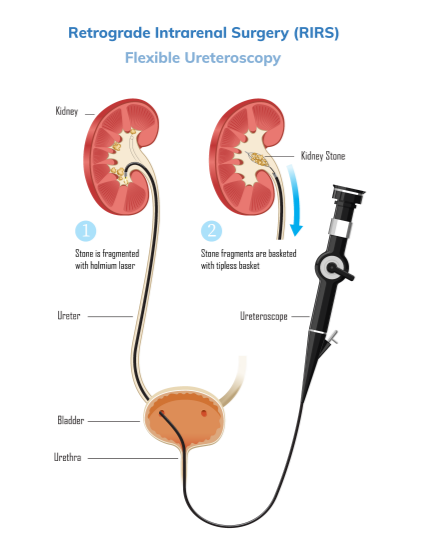
1. Patients with Small to Medium-Sized Kidney Stones
Characteristics:
- Stone Size: Typically less than 2 cm in diameter.
- Stone Location: Stones located in the renal pelvis or calyces (the chambers of the kidney where urine collects).
Why It Matters: RIRS is most effective for stones that are not too large. Smaller stones are easier to break up with the laser and remove, making RIRS a suitable choice for these cases.
2. Patients with Stones in Difficult-to-Reach Areas
Characteristics:
- Stone Location: Stones situated in challenging locations such as the renal calyces or the upper pole of the kidney.
Why It Matters: RIRS allows access to stones in areas that might be challenging for other procedures like shock wave lithotripsy or percutaneous nephrolithotomy. The flexible nature of the endoscope used in RIRS enables precise navigation within the kidney.
3. Patients Who Have Not Responded to Non-Invasive Treatments
Characteristics:
- Previous Treatments: Patients who have not had success with shock wave lithotripsy (SWL) or other non-invasive treatments.
Why It Matters: When less invasive methods fail, RIRS can offer a more direct approach to stone removal, especially for patients who still want to avoid more invasive surgical options.
4. Patients with a Single Kidney or Renal Compromise
Characteristics:
- Kidney Health: Individuals with one functional kidney or compromised kidney function.
Why It Matters: For patients with only one kidney or reduced kidney function, preserving kidney health is crucial. RIRS, being minimally invasive, is a suitable option as it poses less risk to kidney function compared to more invasive procedures.
5. Patients with Stones in Complex Cases
Characteristics:
- Complexity: Stones that are staghorn or have other complicated features.
Why It Matters: RIRS can handle complex cases due to its flexibility and precision. It can address staghorn stones, which are large stones that fill the kidney’s collecting system, and provide effective fragmentation and removal.
6. Patients with High Surgical Risks
Characteristics:
- Health Condition: Individuals with significant comorbidities that make major surgeries risky.
Why It Matters: RIRS is less invasive and generally carries fewer risks than open surgery or percutaneous nephrolithotomy. For patients who are at high risk for complications from more invasive procedures, RIRS offers a safer alternative.
7. Patients Seeking a Shorter Recovery Time
Characteristics:
- Post-Operative Goals: Individuals looking for a procedure with a quick recovery time.
Why It Matters: One of the advantages of RIRS is its minimal invasiveness, which often results in shorter hospital stays and faster recovery compared to traditional surgical methods.
8. Patients with Specific Urological Conditions
Characteristics:
- Conditions: Conditions such as ureteral strictures or anatomical abnormalities that may complicate other surgical methods.
Why It Matters: RIRS can be adapted to handle some of the anatomical challenges presented by such conditions, making it a viable option where other methods may not be feasible.
Comments
Post a Comment